Followers

Powered by Blogger.
Thursday, February 24, 2011

Bass Clef


The first step to sight reading is to know the notes within the staff.

Some music books use phrases like Good Boys Don't Fight (G B D F) and All Cows Eat Grass (A C E G).

For me, I recognize by chords.

G B D F is a G7 chord and A C E G is an Am7 chord.

Whichever works for you, use it.

Start reading something simple before going into complicated rhythms.

Cheers
Wednesday, February 2, 2011

Minor Chord Substitution


Chord Substitution is common in our music today.

We can replace a chord with another related chord.

Often the substituted chord differs by one or two notes from the original chord.

Before you read this post, it will be good to take a look at my previous lesson - Introduction to Chords Substitution

For example, we can replace an Am7 chord with a Fmaj7 chord.

The notes in the Am7 chord are: A C E G

In the Fmaj7 chord the notes are: F A C E

There is only one note difference between these two chords.

If we have an Em7 chord, we can replace it with a Cmaj7 chord.

You can also replace the Em7 chord with a Gmaj7 chord.

The notes in the Em7 are: E G B D and G B D F# for Gmaj7.

Again the difference is only in one note. You can call this a relative chord.

Hope this helps.
Thursday, January 27, 2011

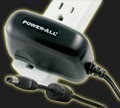
Universal 9 Volt DC Power Supply


Recently I bought an effect pedal and realize that the adapter that comes with it supply only 120v but my country uses 220-240v.

To get a transformer to step up could be quite troublesome and bulky.

I found out that we can use an Universal 9 Volt DC Power Supply.

The auto-sensing circuitry runs off 100-240 volts and can use it anywhere in the world.

Take up only one outlet space and makes it easy to travel.

You can check out '1 Spot' by Visual Sound or 'Power All' by Godlyke.

Hope this information is useful.
Sunday, January 2, 2011

Improvise using the 5th

Hi,

We are going to take a look at using the 5th of the chord tones when we improvise.

This lesson helps us to break away from landing on the root especially during solos.

For example if the chord is a Cmaj7, you can land on the G since it is still within the chord tones.

Now try playing the G Arpeggio.

The notes in the G Arpeggio are G, B and D (end with G octave).

G is the 5th of Cmaj7, B is the 7th of Cmaj7 and D is the 9th of the chord.

Have fun.
Wednesday, December 29, 2010

Right Hand Technique ( 3 fingers)

Hi,

I would like to share with you the 3 fingers technique which I am trying to improve and apply.

The plucking concept is similar to that of playing on a classical guitar.

You can check out Bass players like Dominique Di Piazza and Damian Erskine for more applications and examples.


T - Thumb
m - middle finger
i - index finger

Practice slow and gradually increase the speed.

Have fun!
Wednesday, December 8, 2010

Playing Chords on Bass (3 positions)

Hi,

We know that a basic chord is formed by 1 3 5.

For example, the notes in an A chord will be A (1) C# (3) E (5).

I have tabbed out three different positions of an A chord.

Some of you will know them as inversions.


Remember the shape and shift it around to play other chords.

Hope this is clear.

Have fun.
Thursday, December 2, 2010

G Major Scale Exercise

Hi,

The exercise below is an alternate way to practice the G major scale.

Sometimes when you improvise in the key of G, this pattern can be quite useful.


This will help you to be more familiar with the fretboard.

You can practice playing backward as well.

Have fun

About Me